
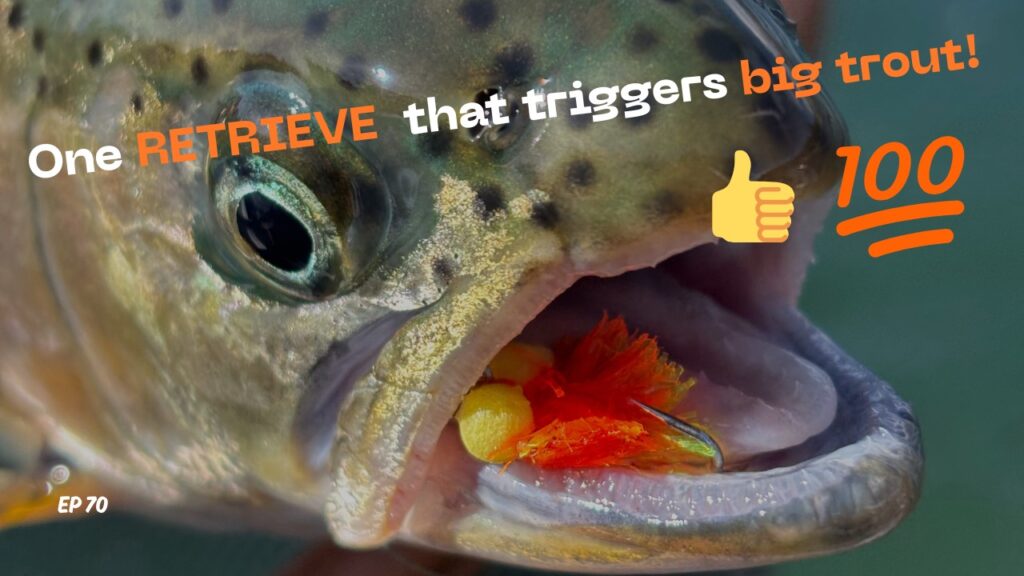
When fall water temperatures drop, trout shift into full-on feeding mode but if you’re still using summer retrieves, you’re missing out. This technique, proven and tested, is built to mimic the bigger prey trout crave in cooler water and it’s simple to master once you understand why it works.
Why Fall Changes the Game
As temperatures cool, trout switch gears. Their metabolism spikes, their need for calories climbs, and they move away from small midges and nymphs in favour of big, protein-rich meals. Fall is all about calories, not snacks and your presentation has to match that mindset.
Think leeches, dragons, boatmen, backswimmers, and minnows. Those are the steak dinners trout are hunting. To consistently connect with fish in this window, your retrieve needs to mimic that bulkier, high-energy prey.
The “Coast and Burst” Retrieve
The retrieve that repeatedly produces for Greg in the fall is a hybrid motion he calls the Coast and Burst Retrieve.
Here’s how it works:
- Long, slow pulls — mimic a leech or minnow gliding through the water.
- Sudden, fast burst — trigger the predator response.
This combination makes trout react instinctively. The quick surge signals a fleeing baitfish, and their natural response is to chase it down and crush it.
Example Sequence:
Strip, strip… BURST! Then pause. Try three long pulls, a short break, and another burst. Repeat.
The sudden change in speed is what flips the switch. You’re no longer “presenting” a fly you’re forcing a reaction bite.
Choosing the Right Fly Line
To make this retrieve truly shine, you need the right sink rate and line profile. Greg recommends working in 3 to 10 feet of water using:
- SA Sonar S3/S1 Integrated Line – a perfect blend for fall depths.
- RIO CamoLux – a go-to for gradual sink and stealth.
- Clear Camo (SA or RIO) – Greg’s Stillwater staple, ideal for a subtle fall presentation.
Let your fly count down to the correct depth before starting the retrieve, and experiment through the water column. Most takes come mid-depth or near the bottom as trout patrol for calorie- dense prey.
Real-World Results
Greg first tested this retrieve during a cold October-November session in BC. Fishing 10 feet of water beside his neighbour, he doubled his catch rate. After showing his partner the retrieve, they both started hooking up proof that the Coast and Burst motion wasn’t just theory.
Fall stillwaters are wired for aggression. When trout sense prey fleeing, they hit hard and fast.
Try It This Fall
Next time you’re on the lake and the air feels crisp, try this:
- Fish a larger profile fly (booby, dragon, or balanced leech).
- Use long, slow pulls with short bursts.
- Hold on — the takes will come fast.
Experiment with cadence, pause length, and retrieve speed. You’ll feel the difference the moment a trout commits.
Related Resources
If you want to keep sharpening your fall tactics, explore these top Stillwater Edge Podcast episodes:
- The Secret Power of Clear Camo Fly Lines in Stillwater Trout Fishing
- How to Break Down a New Stillwater in 30 Minutes
- The Perfect Landing Net for Stillwater Fly Fishing
For even deeper insights, check out these excellent external guides:
- Scientific Anglers Fall Line Selection
- RIO Products Fly Line Breakdown
Next Steps
If you’re ready to hook more fall trout, start by subscribing to the Stillwater Edge Newsletter. Each month, you’ll get free downloadable PDFs, gear giveaways, and direct links to top podcast episodes all designed to help you fish smarter and catch more.
Want hands-on instruction? Book a guided trip or Stillwater skills session with Greg at theStillwaterEdge.com and see this retrieve in action on the water.