
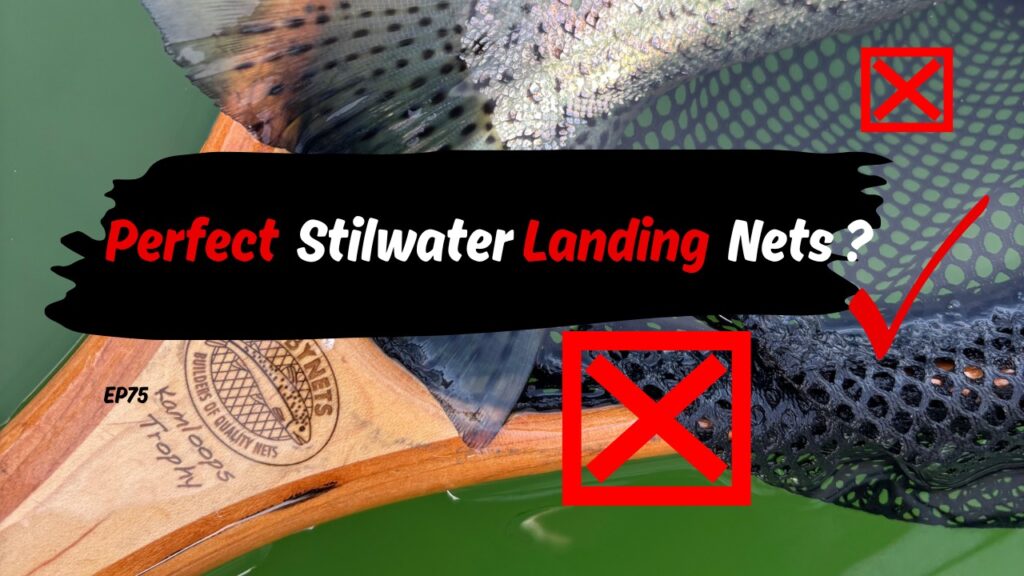
On stillwaters, the right landing net does more than scoop fish it protects trout during release and quietly raises your landing percentage. If you’ve ever watched a heavy fish cartwheel beside the boat and pop the hook, you already know why this matters. Across seasons whether you’re leaning into the aggressive windows described in our spring vs. fall stillwater tips net choice often decides how the fight ends.
Size and Depth: Cradle the Fish, Don’t Fold It
Stillwater trout are typically larger than river fish. A hoop in the 18–22 inch range with a genuinely deep bag lets you guide a 20 plus-inch fish forward into the mesh and settle it without bending the body or levering the jaw. Shallow, river-style bags are where thrashing starts and hooks bend.
If your program includes anchored presentations or long fights on light tippet, a deep basket is inexpensive insurance.
Handle Length: Reach Matters on Anchored Boats and Tubes
Because most lake presentations happen from an anchored position, fish often make a last surge when they see the hull, motor, or your fins.
A 36–48 inch handle on a boat net helps you meet the fish away from the trouble zone before it finds the anchor rope you worked so hard to keep clear (more on organizing the deck in our boat layout efficiency guide).
For float tubes and shore setups, a balanced 18–36 inch handle avoids bulk yet still gives the reach to keep fish calm and moving forward.
Mesh Material: Protect the Slime Coat and Your Flies
Old, knotted nylon bags and cheap metal frames are hard on fish and hard on barbless hooks. Choose rubber mesh for easiest fly removal or a ghost-style mesh if you want the lightest swing weight for solo netting. Both protect the slime coat and fins and dramatically reduce tangles.
If you need a primer on gentle handling during release, the practices in Trout Unlimited’s fish-handling guidance mirror what we teach on the water and pair well with the ethics we outline in recognizing trout stress on stillwaters.
Depth and Security: Fewer Rodeos at Boat side
A deeper bag is more than convenience it’s safety. It keeps the fish contained while you unpin the hook or take a quick measurement, reducing the chances of the trout tumble-rolling out of a shallow basket and cracking a fin on the gunwale.
That security becomes even more important during warm spells and low-oxygen periods when you’re prioritizing fast, low-stress releases.
Weight, Durability, and Visibility: Small Details That Pay Off
Composite and carbon handles are light and durable; wooden frames are beautiful but need periodic refinishing after a season of hard use.
Whichever you choose, prefer dark mesh that doesn’t flare like a signal flag under the surface. It’s a small detail that keeps anxious fish moving forward rather than bolting at the last second.
Non-Negotiable: Your Net Should Float
When you’re unhooking, sampling, or guiding two anglers at once, a sinking net becomes a liability. A floating frame lets you free both hands without watching your gear disappear.
It’s one of those features you only notice when it’s missing.
Carry and Stow: Rig It So It’s Always Ready
Float-tubers often strap nets behind the seat; shore anglers benefit from a magnetic release on the back.
In boats, give the net a dedicated home so it doesn’t grab leaders, indicators, or oars your landing percentage improves when the last tool you touch is always exactly where you expect it.
If you’re building a clean, snag-free deck, the storage ideas in our boat layout article are a quick win.
Putting It Together on the Water
Choose a large hoop with a deep, fish-safe bag; match the handle length to your platform; make sure the net floats; and keep it stowed where it can’t foul lines.
Combine that with calm handling and the conservation practices endorsed by the Freshwater Fisheries Society of BC, and you’ll land more trout in better condition throughout the year.
If you want a live, on-water walkthrough of this system tuned to the seasonal windows we talk about in spring vs. fall strategy and guided by the same ethics from our trout-stress checklist you can book a guided day
We’ll set your boat up, refine your netting workflow, and target productive stillwater structure while the bite window is open.